
 Healthcare SEO
 PPC & Google Ads
 Website Design
 Content Marketing
 Reputation Management
How to Leverage Content for 1.35M+ Impressions and Domain Authority
A look at how Sinopia powered search performance for a specialist neurology article resulting in significant share of voice gains asset by leveraging search-intent analysis, content restructuring, direct answers, structured data, and healthcare-focused optimization.
Services: Healthcare SEO, Content Marketing, Technical SEO
Published Apr 9, 2026
5 min read
1.35M+
Search impressions
361K
AI search impressions
9.63K+
Organic clicks
Services: Healthcare SEO, Content Marketing, Technical SEO, Lead Generation
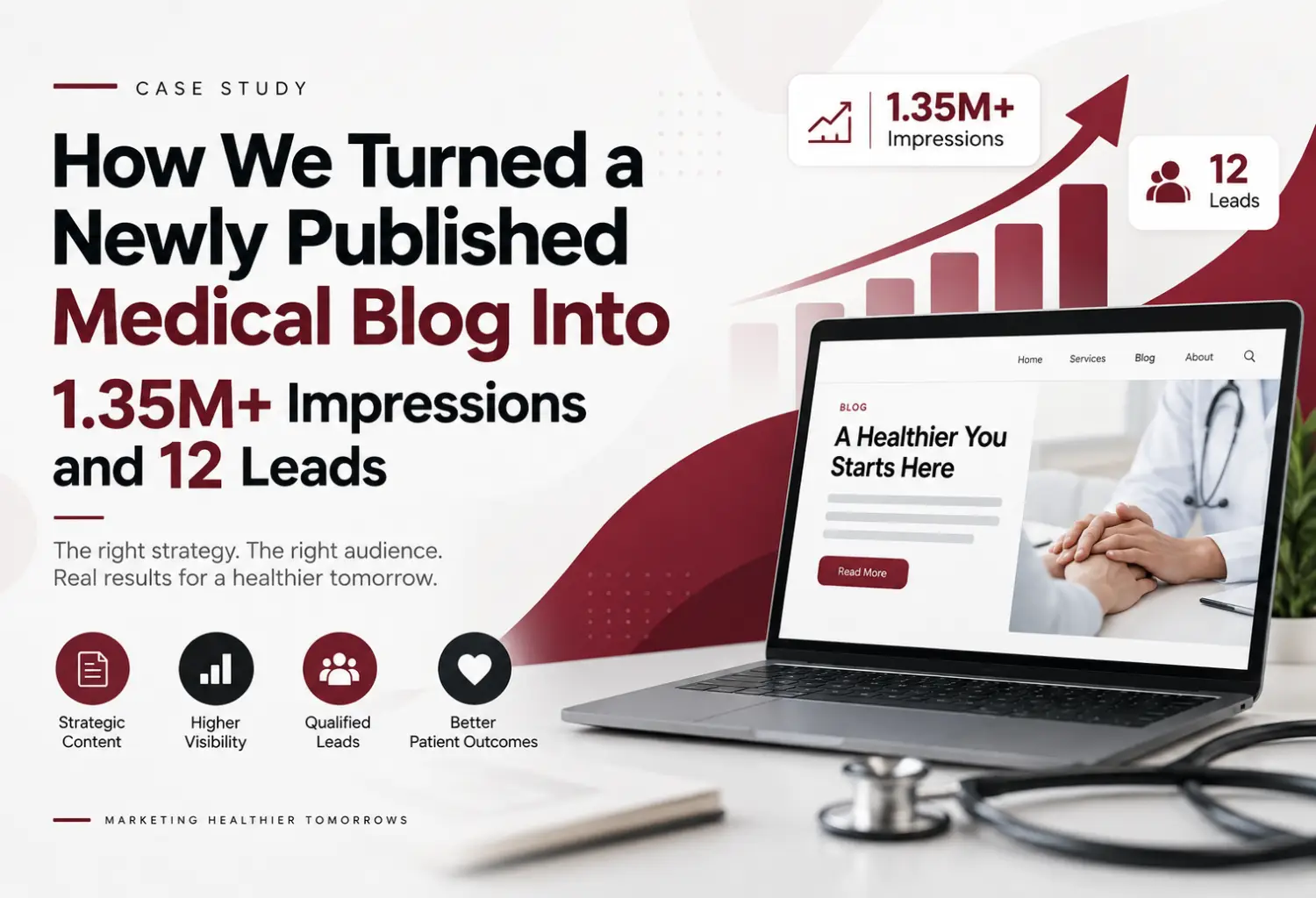
A newly published neurology article was indexed but underperforming on organic visibility. Sinopia restructured content around search intent, direct answers, broader symptoms coverage, added medical trust signals, and structured data. The optimized article went on to generate 1.35M+ search impressions, 361K AI search impressions, 9.63K+ organic clicks, 11,519 sessions, and 12 new patient leads.
What was the problem?
A medical article even if well-written and indexed by Google, may still fail to attract meaningful organic perfromance. That was the situation with a newly published neurology article covering the early signs of Multiple Sclerosis (MS). The article had indexed the same day, April 9, 2026, but generating minimal impressions and virtually no meaningful traffic through the following weeks.
What did we do?
- Reworked the article into a listicle organized around individual early signs of MS (vision problems, numbness and tingling, Lhermitte’s sign, fatigue, balance issues, bladder changes, cognitive changes), since a symptom-led query benefits from a scannable structure.
- Added direct-answer sections addressing the questions people were actually asking, reducing the distance between question and answer.
- Strengthened medical structured data — medical webpage and FAQ schema — as a supporting layer alongside the content changes, not a standalone fix.
- Reinforced medical trust signals: the article credits a Clinical Team as writer and a Neurologist as medical reviewer, and clearly distinguishes symptoms from diagnosis.
- Optimized for the broader topic rather than a single keyword, connecting early signs to related concepts (vision, numbness, fatigue, balance, cognitive changes, symptoms in women, diagnosis, when to seek evaluation).
- Broadened keyword targeting from the original title alone to a connected cluster: core terms (MS symptoms, symptoms of MS, signs of MS), early-stage terms, and women-specific terms.
How did compliance shape the work?
What were the results?
What would we do differently?
Key takeaways
- Being indexed does not guarantee meaningful search visibility.
- Structure medical content around search intent, not just one keyword.
- Direct answers and FAQs make complex healthcare information easier to discover.
- Medical trust signals and structured data should support strong, useful content.
- One optimized article generated 1.35M+ impressions and 12 patient leads.