
How We Turned a Newly Published Medical Blog Into 1.35M+ Impressions and 12 Leads
A look at how Sinopia transformed an underperforming neurology article into a high-visibility organic search asset through search-intent analysis, content restructuring, direct answers, structured data and healthcare-focused optimization.
The Challenge
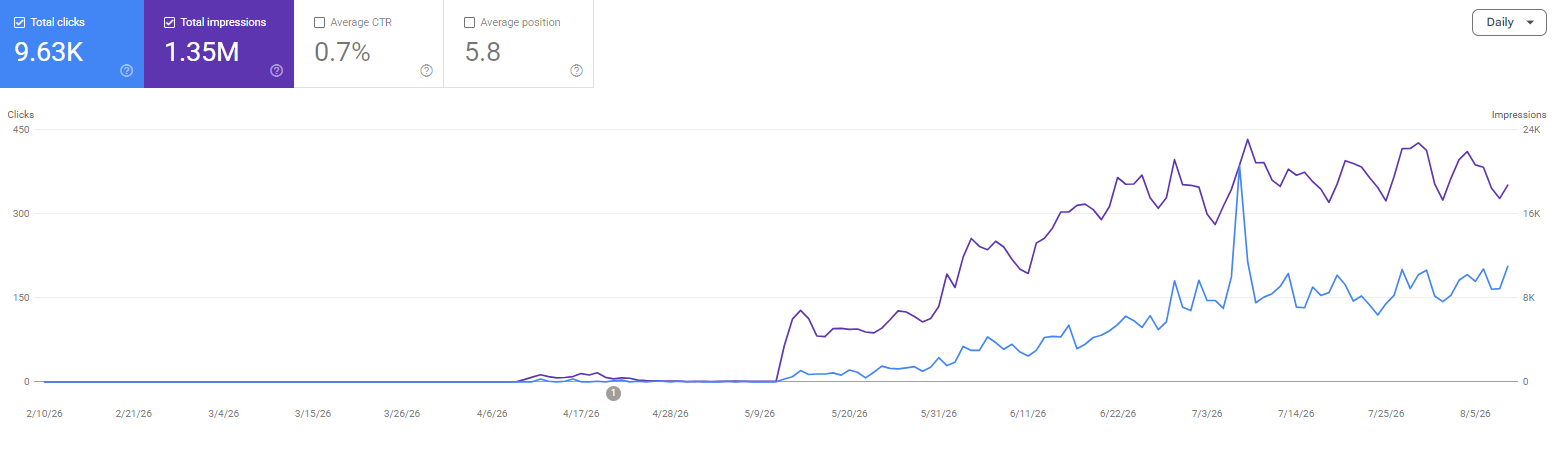
A medical article can be accurate, well-written, and indexed by Google, yet still fail to attract meaningful organic visibility.
That was the situation we encountered with a newly published article for Neurology practice covering the early signs of multiple sclerosis. The article was originally published on April 9, 2026, and indexed the same day. Yet through the following weeks, the page generated minimal impressions and virtually no meaningful organic traffic.
Instead of simply waiting for the page to rank, we looked at the search opportunity, the way the information was presented, and how the content could better answer the broader set of questions people were asking.
The goal wasn't simply to rank one keyword. It was to turn one medical article into a useful search asset around the broader topic of multiple sclerosis symptoms.
The Starting Point: Indexed, But Not Visible
Indexation confirmed that Google could discover the article. But indexation is only the beginning of an SEO lifecycle. The page needed stronger alignment with search intent and a structure that made its answers easier to find and understand.
Before
Newly published medical article
Indexed quickly
Minimal impressions
Little meaningful organic traffic
Limited query footprint
After
Search-intent-led listicle
Direct answers and FAQs
Medical and FAQ structured data
Broad MS symptom query visibility
11,519 sessions and 12 leads
Our Strategy
What the Search Opportunity Revealed
Once we looked beyond the article's exact title, the topic became much larger. Users weren't searching only for “early signs of multiple sclerosis.” They were searching for symptoms, signs, early symptoms, and variations of those searches focused on women.
Core: MS symptoms, multiple sclerosis symptoms, symptoms of MS, signs of MS
Early-stage: early signs of MS, early signs of multiple sclerosis
Women: MS symptoms in women, symptoms of MS in women, early signs of MS in women
That changed our content strategy. Instead of optimizing for one phrase in isolation, we built the article to serve a connected search topic.
Key Tactics
What We Changed
We Reworked the Article Into a Listicle
For a symptom-led informational query, users often want to scan a list and quickly understand what each symptom may look like. We reorganized the article around individual early signs of MS, including vision problems, numbness and tingling, Lhermitte's sign, fatigue, balance and coordination issues, bladder changes and cognitive changes.
The format gave every major symptom a clear place in the article while making the content easier to navigate and understand.
We Added Direct Answers
We introduced concise answer-first sections around the questions people were actually asking. The goal was to reduce the distance between a user's question and the answer, then provide deeper context below it.
This also made the content better suited to answer-oriented search experiences. We did not treat direct answers as a ranking shortcut; they were part of a larger effort to improve usefulness and semantic clarity.
We Strengthened Medical Structured Data
We implemented appropriate medical webpage structured data and FAQ schema as supporting layers for the content. The objective was to give search engines clearer contextual signals about the page and its question-and-answer content.
Important: We do not attribute the traffic growth to schema alone. Structured data was one component of a broader optimization that included content restructuring, search-intent alignment, direct answers, topical coverage and medical trust signals.
We Reinforced Medical Trust Signals
Healthcare content is different from ordinary informational content. The live article identifies the Clinical Team as the writer and the Neurologist as the medical reviewer, while providing medical context and distinguishing symptoms from diagnosis. This type of responsible presentation is important when content can influence health decisions.
We Optimized for the Topic, Not Just the Keyword
The article was developed as a broader resource around multiple sclerosis symptoms. That meant naturally connecting early signs with related concepts such as vision problems, numbness, fatigue, balance issues, cognitive changes, symptoms in women, diagnosis, and when to seek neurological evaluation.
Visibility Expanded Across the MS Symptom Topic
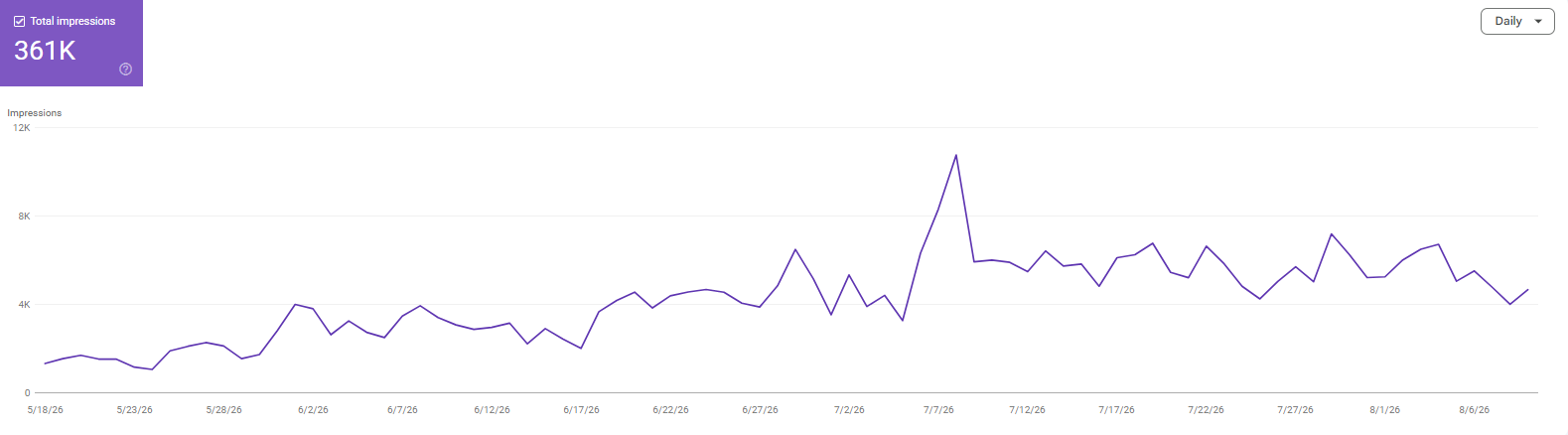
One of the most important outcomes was the breadth of the page's search footprint. The article developed visibility across broad, high-value symptom queries as well as more specific variations.
The article did not remain confined to one long-tail phrase. It gained visibility across a broader semantic cluster, including the much broader query “multiple sclerosis,” where the page reached an average position of 2.3 in the supplied report.
From Search Discovery to Lead Generation
Organic traffic was not the only objective. The article was designed as a top-of-funnel resource that educates first and creates a natural next step for people who may need professional neurological evaluation.
Search query → Organic visit → Education & trust → Relevant CTA → Lead
The article includes a section explaining when someone should consider seeing a neurologist and a consultation pathway for the practice. This allows an informational search journey to move naturally toward an appropriate healthcare action.
The result: 12 leads/key events attributed to this top-of-funnel blog in the supplied GA4 data.
Why This Strategy Worked
Indexing was only the beginning.
Getting a page into Google's index does not guarantee that it will become competitive for valuable searches. The optimization process addressed what happened after indexation.
Format followed search intent.
A symptom-focused query benefits from a structure that lets users quickly identify the symptom they are interested in and then explore the supporting explanation.
The article became a topic resource.
Rather than repeating a single target phrase, the content addressed a connected set of related searches and concepts.
Technical signals supported substantive content.
Medical and FAQ structured data were used alongside actual content improvements. The strategy was not “add schema and wait.”
Healthcare quality remained central.
Medical authorship, review information, responsible symptom language and a clear distinction between information and diagnosis were important parts of the content experience.
The Bigger Lesson for Healthcare SEO
This campaign demonstrates a simple but important principle: publishing content is not the same as building a search asset.
A successful healthcare content process looks more like:
Research → Diagnose → Restructure → Optimize → Measure → Refine → Grow
When a page isn't performing, the answer isn't always “write more.” Sometimes the opportunity is to rethink the format, the questions being answered, the topic coverage, the technical context and the path from information to action.
Is your healthcare content being found?
Sinopia helps healthcare practices build search visibility, attract qualified traffic and turn digital marketing into measurable patient-growth opportunities through healthcare SEO, content strategy, technical SEO and conversion optimization.